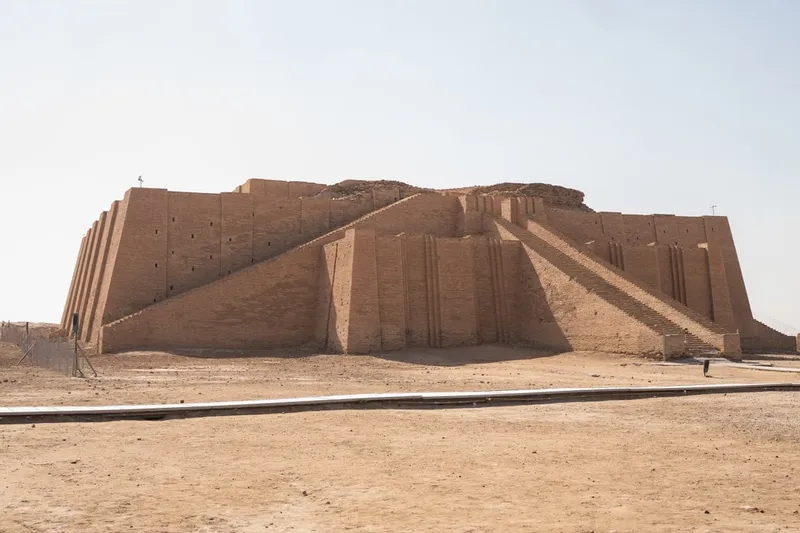
Structure Type: Temple tower
Architectural Tradition: Ancient Mesopotamian
Primary Materials: Mud brick (core), baked brick (facing)
Function: Religious / ceremonial
Symbolism: Sacred mountain; link between heaven and earth
Notable Examples: Ziggurat of Ur; Etemenanki
Definition
A ziggurat is a monumental stepped temple tower built in ancient Mesopotamia, designed to elevate a shrine above the surrounding city. It served as a sacred platform rather than a tomb or interior worship hall.
Architectural Features
- Tiered, receding levels forming a stepped silhouette
- Rectangular or square base
- Exterior staircases or ramps leading upward
- Solid interior (not hollow chambers)
- Temple shrine at the summit
- Oriented within a larger temple complex
Construction Techniques
- Sun-dried mud brick core
- Kiln-fired bricks for outer layers
- Bitumen mortar in some regions
- Periodic restoration required due to erosion
Cultural & Religious Context
Ziggurats were dedicated to specific deities and formed the religious heart of Mesopotamian cities. In the flat alluvial plains between the Tigris and Euphrates, they functioned symbolically as man-made mountains, lifting sacred space above ordinary ground.
They were statements of divine order and royal authority, often commissioned by kings to demonstrate devotion and legitimacy.
Historical Context
Ziggurats were primarily built by:
- Sumerians
- Akkadians
- Babylonians
- Assyrians
The form developed in the 3rd millennium BCE and continued into the Neo-Babylonian period.
Comparative Notes
- Unlike Egyptian pyramids, ziggurats were not burial structures.
- Unlike Greek temples, ritual activity centered on elevation rather than interior congregation.
- Architecturally related to stepped platforms found in other ancient cultures, though independently developed.
Related Concepts
- Mesopotamian temple complexes
- Sacred geography
- Temple economy
- City-state architecture
- Ancient Near Eastern religion